
RE policy 2025-2026
“Let your light shine before others, that they may see your good deeds.”
Matthew 5:16.
Forming our futures, growing in family, grounding in faith.
Why is Religious Education important in our school?
Religious Education is the "core of the core curriculum" in a Catholic school (Pope St John Paul II). Placing RE at the core of the curriculum in Catholic schools helps the school to fulfil its mission to educate the whole person in discerning the meaning of their existence, since "Religious Education is concerned not only with intellectual knowledge but also includes emotional and affective learning. It is in the mystery of the Word made flesh that the mystery of what it is to be human truly becomes clear. Without religious education, pupils would be deprived of an essential element of their formation and personal development, which helps them attain a vital harmony between faith and culture." (Religious Education Curriculum Directory, p4).
At St Mary’s Catholic Primary School, we pride ourselves on our welcoming Christian ethos, founded on the teachings of Jesus. Our ethos is rooted in the Gospel values of love, respect, forgiveness and service to others. We aim to educate the whole child- academically, morally and spiritually. While faith shapes the life of our school, we are very inclusive. We want every child to feel known, valued and supported.
Religious Education is a core subject at St Mary’s Catholic Primary School. Our curriculum is mapped out following the branches on the Religious Education Directory.
Through their Religious Education lessons, the children explore their faith, the teachings of the Church, and learn to retell and understand key bible stories. Lessons are age-appropriate, engaging and reflective, helping children to grow spiritually, morally and intellectually as they journey in faith. Through the RED, pupils explore the rich traditions of the Church, Sacred Scripture, prayer and liturgy, and how faith is lived out in everyday life. Religious Education supports our mission to nurture the whole child and to help each pupil recognise their unique God-given gifts and their role in God’s plan. Children are assessed against the Ways of Knowing which can be found on these Knowledge Organisers.
Religious Education Directory - 'To know you more clearly'.
A new RED was published in 2023 and we implemented this RE curriculum in light of this new guidance into our RE lessons for EYFS- Year 4. This is now fully in place in Catholic schools.
Four knowledge lenses concerned with the study of Catholicism:
Hear, Believe, Live and Celebrate. These indicate what should be known by the end of each age phase.
Two knowledge lenses for the study of other religions and worldviews:
Dialogue and Encounter.
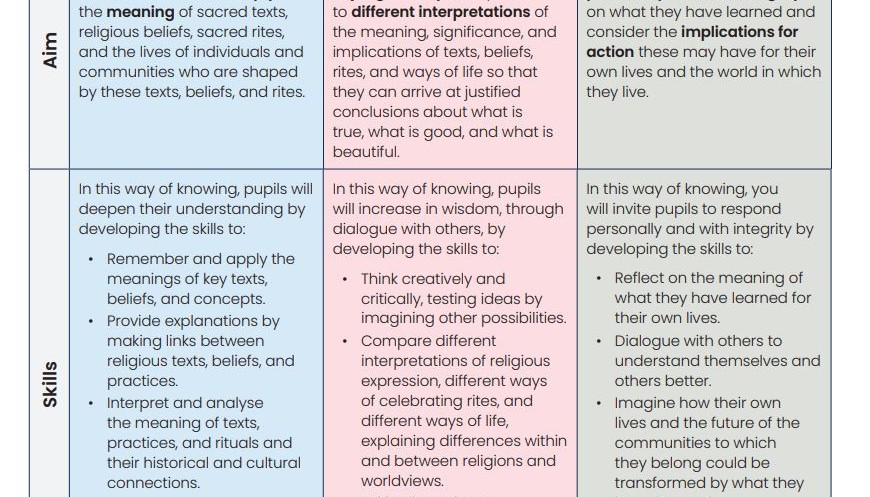
Ways of Knowing: Understand, Discern and Respond are the skills through which pupils and students progress and develop their thinking during the curriculum journey.
Expected Outcomes set out for each age phase what pupils and students should be able to know, remember and do.
Curriculum Branches divide the model curriculum into half-term units of study which repeat annually, giving a spiral curriculum which allows pupils and students to build progressively on prior knowledge and develop their understanding year by year.
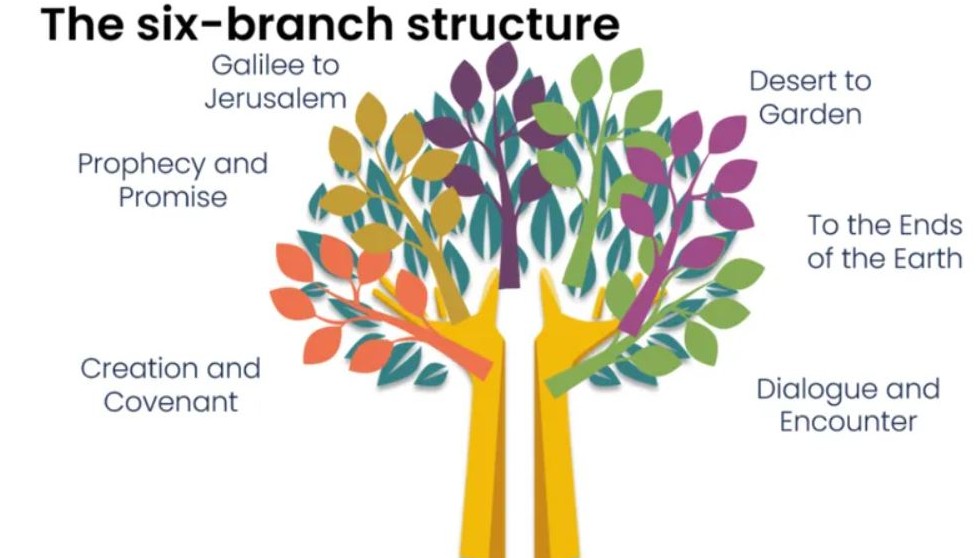
The curriculum branches are:
Autumn 1: Creation and Covenant Autumn 2: Prophecy and Promise
Spring 1: Galilee to Jerusalem Spring 2: Desert to Garden
Summer 1: To the Ends of the Earth Summer 2: Dialogue and Encounter
Please read the document below if you wish to look at the new document in more detail.
RED To Know You More Clearly
Your Right to Withdraw
As a parent, you have the legal right to withdraw your child from some or all of Religious Education (RE) lessons. This right is protected under the Education Act 1996 and applies to all maintained schools, academies and free schools in England.
Things to consider before withdrawing
Before making a decision, you may want to consider:
The purpose of RE: RE is not about promoting a particular faith but about exploring different religious and non-religious worldviews. It helps children develop understanding, respect and critical thinking skills.
Alternative Learning: Schools are not required to provide alternative lessons if your child is withdrawn. You may be asked to supervise their learning at home or provide suitable materials.
Social and Cultural Benefits: RE can help children understand different cultures, beliefs and moral issues, promoting inclusivity and respect for others.
How to withdraw your child
Contact the school: Speak with the Headteacher or the RE Leader to discuss your concerns and understand the curriculum.
Submit a Formal Request: A written request is usually required. You do not need to give a reason.
Agree on arrangements: Schools will discuss how your child's time will be managed during RE lessons.
Final thoughts
Withdrawing your child is a personal decision. If you are unsure, consider discussing it with your child, the school or other parents to make an informed choice.